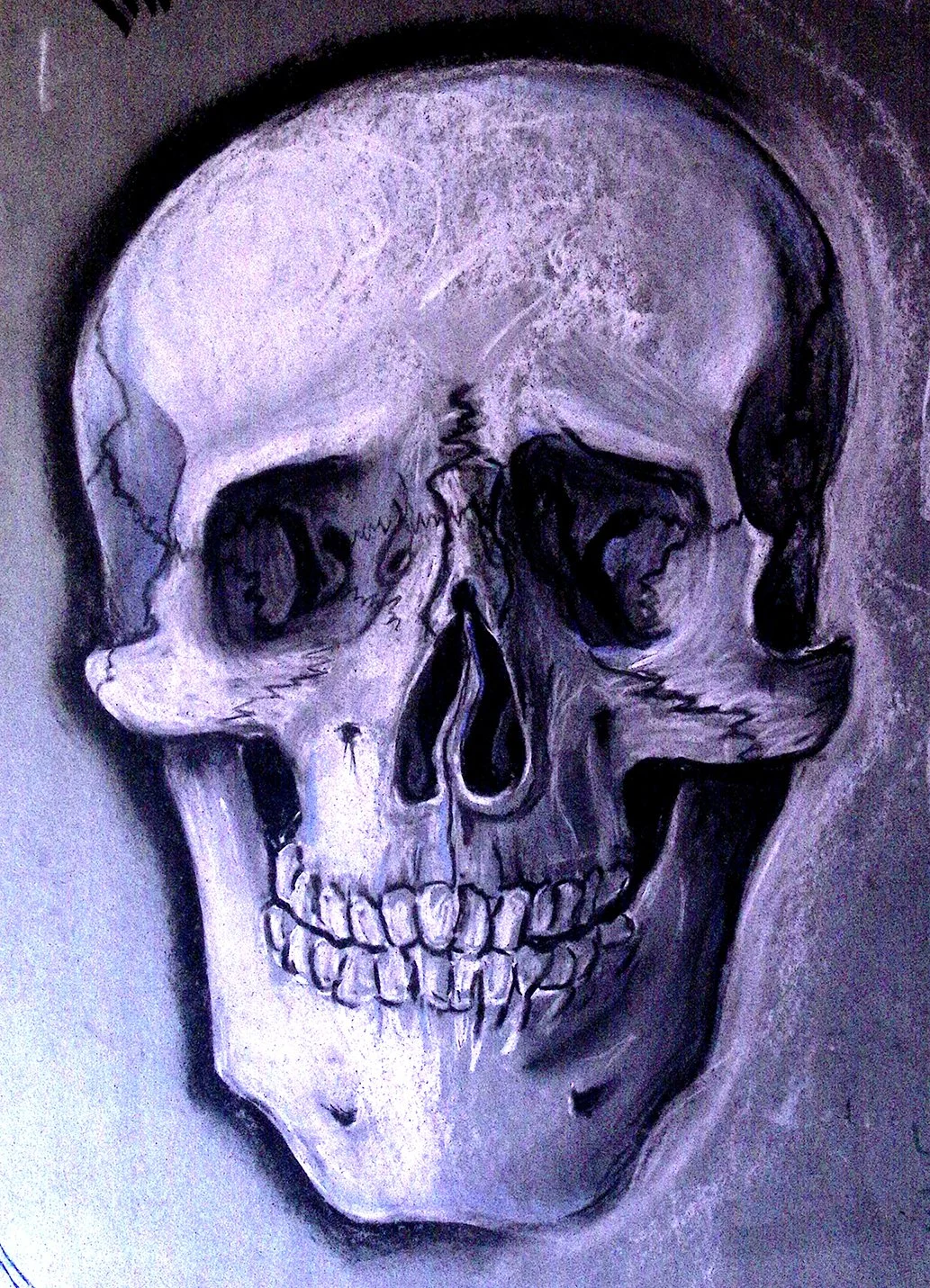
Confront what cannot be softened. The skull is rendered with careful attention, but not polished into perfection. Instead, the texture remains visible. Smudges, scratches, and uneven shading give it a sense of presence, as if it is emerging rather than being fully defined. It does not feel distant or clinical. It feels close.
There is something almost human in its asymmetry. The features are not perfectly aligned. The eye sockets carry different weights. The teeth are slightly irregular. These small imperfections shift the skull from symbol to subject. It is no longer an abstract reminder of mortality. It becomes specific, almost personal.
The choice of a muted, cool palette reinforces this tone. The color does not dramatize the image. It quiets it. The result is less about fear and more about inevitability. There is no shock here. Only recognition.
What stands out most is the tension between structure and erosion. The skull is solid, enduring in form, yet marked by time. Lines suggest cracks, wear, and subtle decay. It speaks to the idea that even what feels permanent carries the imprint of change. In that way, the piece is not simply about death. It is about exposure. The stripping away of everything nonessential until only form remains.